
Hiking Mount Cammerer Fire Tower: An Appalachian Trail Adventure in Great Smoky Mountains National Park
Join Crockett Ridge Outdoors on a scenic hike from Cosby Campground to Mount Cammerer Fire Tower and Davenport Gap. Discover Appalachian Trail history, wildlife, CCC heritage, and breathtaking Smoky Mountain views.
Johnny Miller
6/16/20265 min read
Hiking Mount Cammerer: From Cosby Campground to Davenport Gap on the Appalachian Trail
There are certain hikes in the Great Smoky Mountains that leave a lasting impression long after the boots come off. For me, the journey from Cosby Campground to Mount Cammerer and down to Davenport Gap to the Pigeon River Gorge basin is one of those special adventures.
This route combines challenging climbs, Appalachian Trail history, incredible wildlife habitat, stunning mountain views, and one of the most unique fire towers in America. If you're looking for a hike that truly captures the spirit of the Smokies, this one deserves a spot on your bucket list.
This post may contain affiliate links and we may earn a small commission when you click on a link at no additional cost.
Starting the Journey at Cosby Campground
Our adventure begins at Cosby Campground, one of the quieter corners of Great Smoky Mountains National Park. Sitting at approximately 2,360 feet in elevation, Cosby offers a different experience from the busier sections of the park near Gatlinburg.
The area is known for its towering hardwood forests, mountain streams, abundant wildlife, and peaceful atmosphere. Many longtime Smokies visitors consider Cosby one of the park's hidden gems.
As I stood at the trailhead preparing for the climb ahead, I couldn't help but think about how fortunate we are to have access to places like this. Growing up on an East Tennessee farm and spending countless hours outdoors as a Boy Scout, these mountains have always felt like home.
The Climb Up Low Gap Trail
The hike begins with a steady climb on Low Gap Trail. While beautiful, this section quickly reminds hikers that Mount Cammerer must be earned.
Low Gap Trail gains roughly 2,000 feet of elevation in less than three miles. The trail winds through rich hardwood forests and rhododendron tunnels, steadily climbing toward the Appalachian Trail.
This section is often considered the most physically demanding part of the journey, but the payoff is well worth the effort.
One thing hiking has taught me over the years is that progress doesn't have to be fast. Whether on the trail or in life, simply putting one foot in front of the other will eventually get you where you want to go.
Joining the Appalachian Trail
After reaching Low Gap, the route intersects with one of the most famous footpaths in the world—the Appalachian Trail.
Stretching approximately 2,190 miles from Springer Mountain, Georgia, to Mount Katahdin, Maine, the Appalachian Trail passes through fourteen states and has become a symbol of adventure and perseverance.
Standing at this junction, it's humbling to think that heading south would eventually lead to Springer Mountain roughly 170 miles away, while heading north would require more than 2,000 miles of walking to reach Maine.
The Appalachian Trail is more than just a hiking route. It has its own culture and traditions.
The white paint marks found along the trail are called blazes and serve as navigation markers. A single white blaze means you're on the correct path, while double blazes indicate a change in direction ahead.
Many long-distance hikers also adopt trail names, often earned through memorable experiences or unique personality traits. Some hikers become known by their trail names for years after completing their journey.
Another beloved Appalachian Trail tradition is trail magic—unexpected acts of kindness provided by volunteers known as trail angels. Whether it's a cold drink, fresh fruit, or simply a friendly conversation, trail magic reminds us that the hiking community is unlike any other.
Wildlife Along the Ridge
The eastern side of Great Smoky Mountains National Park is home to an incredible diversity of wildlife.
Black bears are perhaps the most famous residents of the Smokies. With an estimated population of around 1,500 bears, the park supports one of the highest black bear densities in the eastern United States.
White-tailed deer, wild turkey, barred owls, pileated woodpeckers, coyotes, bobcats, and gray foxes also call these mountains home.
Perhaps most impressive is the park's incredible salamander population. Great Smoky Mountains National Park is often referred to as the "Salamander Capital of the World" because it contains more salamander species than anywhere else in North America.
Every hike through these mountains serves as a reminder that we are visitors in an ecosystem that has been thriving for thousands of years.
Arriving at Mount Cammerer
Eventually the Appalachian Trail leads hikers to one of the most spectacular viewpoints in the Smokies—Mount Cammerer.
Rising to an elevation of 4,928 feet, Mount Cammerer offers breathtaking views into Tennessee and North Carolina.
Many longtime residents of the area know the mountain by another name: White Rock.
Long before the fire tower was built, locals referred to the mountain as White Rock because of the bright exposed rock formations visible along the ridge. Even today, many old-timers still use the historic nickname.
Standing atop White Rock, it's easy to understand why generations of East Tennesseans have been drawn to this mountain.
The Historic Mount Cammerer Fire Tower
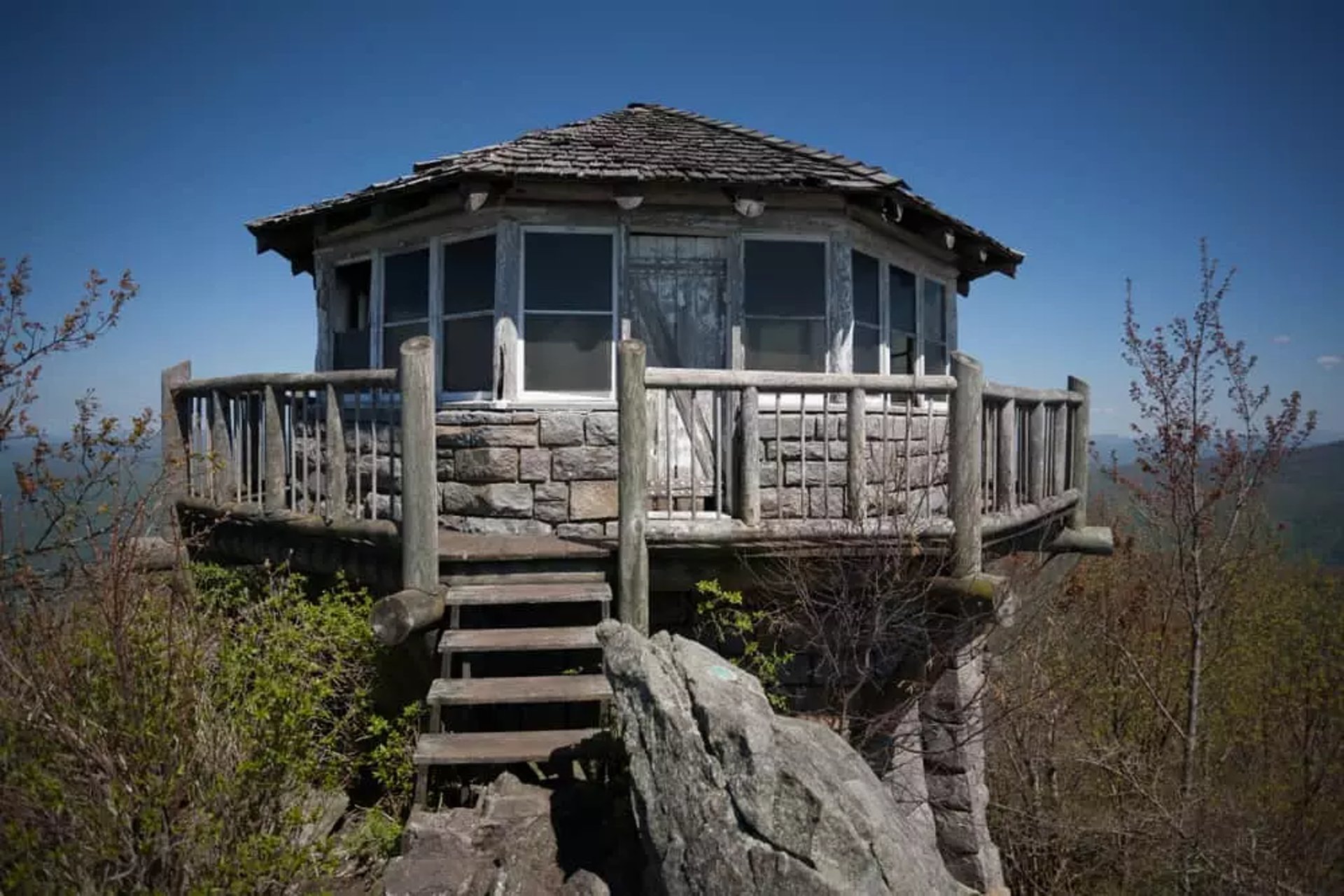
One of the highlights of the hike is undoubtedly the Mount Cammerer Fire Tower.
Many visitors mistakenly assume the structure was built by the Army Corps of Engineers. In reality, it was constructed in 1937 by the Civilian Conservation Corps (CCC).
Created during the Great Depression under President Franklin D. Roosevelt, the CCC employed young men across the country to build trails, campgrounds, bridges, roads, and fire towers.
Much of the infrastructure visitors enjoy throughout the Great Smoky Mountains today was built by CCC workers.
The Mount Cammerer Fire Tower was carefully constructed using native stone and timber. Unlike traditional wooden fire towers, its stone architecture gives it the appearance of a small mountain castle perched high above the forest.
The tower's location provides nearly 360-degree views of the surrounding mountains, making it ideal for spotting forest fires during an era before airplanes and satellite technology.
Imagine spending an entire summer stationed here as a fire lookout. No cell phones. No internet. No television. Just a radio, a stone lookout tower, and endless mountain horizons.
Today the tower stands as one of the most beautiful and unique historic structures in the Smokies.
Descending Toward Davenport Gap
After leaving Mount Cammerer, the trail continues toward Davenport Gap.
The descent follows portions of the Appalachian Trail through rugged mountain terrain before eventually reaching the gap near Interstate 40 and the Pigeon River Gorge.
For centuries, this corridor has served as an important travel route through the mountains. Native Americans, early settlers, traders, railroad workers, and modern travelers have all passed through this area in one form or another.
Today Interstate 40 follows much of the same natural passageway carved through the mountains by the Pigeon River.
Final Thoughts
The hike from Cosby Campground to Mount Cammerer and Davenport Gap offers everything that makes the Great Smoky Mountains special.
You'll experience challenging climbs, Appalachian Trail history, incredible wildlife habitat, breathtaking mountain views, and a fascinating piece of American conservation history.
Most importantly, you'll be reminded why places like Great Smoky Mountains National Park matter.
They connect us to nature, to history, and to something much bigger than ourselves.
If you've never hiked Mount Cammerer, I highly recommend adding it to your Smokies adventure list.
And as always, remember:
Hike More • Camp Often • Fish Longer
— Crockett Ridge Outdoors
Contact
Join Crockett Ridge Outdoors
© 2026. All rights reserved. Crockett Ridge Entreprises, LLC dba Crockett Ridge Outdoors
Menu
Recommended Outdoor Gear
We protect your personal information. By subscribing, you are agreeing to recieve informative updates from Crockett Ridge Outdoors.